Summary: SEO vs PPC are two of the most effective digital marketing strategies for growing a business. SEO helps you attract valuable organic traffic, build trust, and achieve sustainable long-term growth. PPC uses paid ads to generate immediate visibility, leads, and traffic much faster. The best choice depends on your budget, business goals, competition, and timeline. In many cases, combining SEO and PPC delivers the strongest results by balancing short-term wins with long-term growth.
______________________________________________________________________
SEO vs PPC: Which Marketing Strategy Is Best for Your Business?
Difference between PPC and SEO | SEO vs SEM vs PPC | SEO vs Paid Search
Attracting customers and increasing sales are goals for all businesses. However, selecting the right digital strategies, especially when having to choose between Search Engine Optimization or Pay-Per-Click advertising, is very difficult.
SEO is a method that will boost search result visibility for your website organically, while PPC requires payment for your business to appear at the top of search results. The best method for your business will be determined by goals, the cost, industry and competition, as well as the timeframe.
In this blog, we’ll compare SEO vs PPC, explain the key differences between them, explore the advantages and disadvantages of each strategy, and help you determine which approach is best for your business based on your budget, goals, competition, and timeline. We’ll also discuss when combining SEO and PPC can deliver the best results.
What Is SEO?
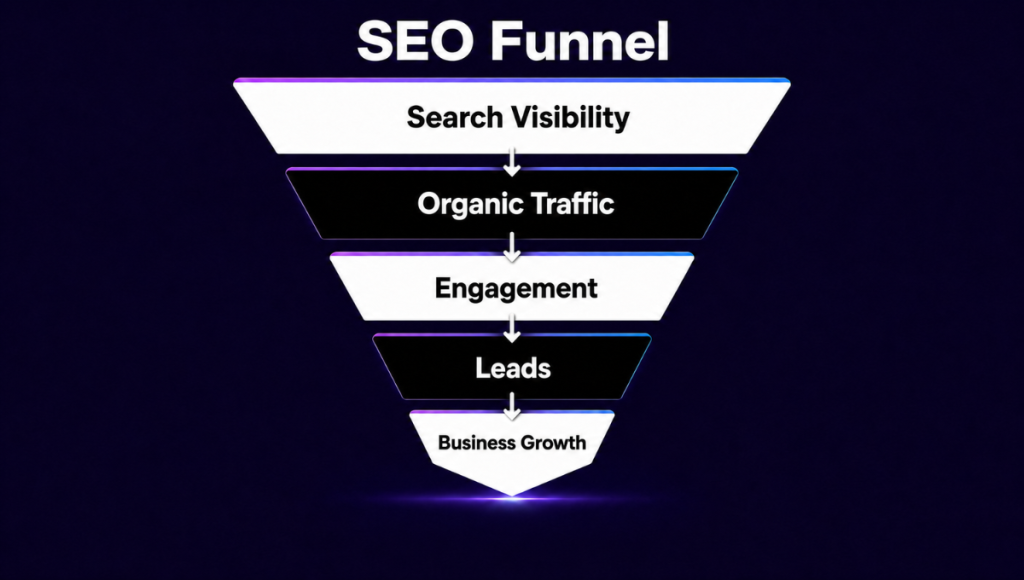
Search Engine Optimization (SEO) refers to various methods implemented to increase the likelihood of a website being shown in unpaid/organic search results.
The implementation of SEO on a website helps Google surface your site on the most relevant search results to a user’s query. SEO helps cover the gaps between the customer’s search and what the website provides. It is a broad term that includes:
- Researching keywords
- Improving the content of the web pages
- Improving the web pages from a technical standpoint
- Building links
- SEO that is done locally
- Improving the site for mobile users
- Better web page loading times
- User experience (UX)
- Creating more content
SEO vs paid search is a long-term marketing tactic because it can take a long time, but the traffic generated can make the time worth it. Understanding Google Ads vs SEO helps businesses choose the right strategy for improving online visibility and attracting customers.
What Is PPC?
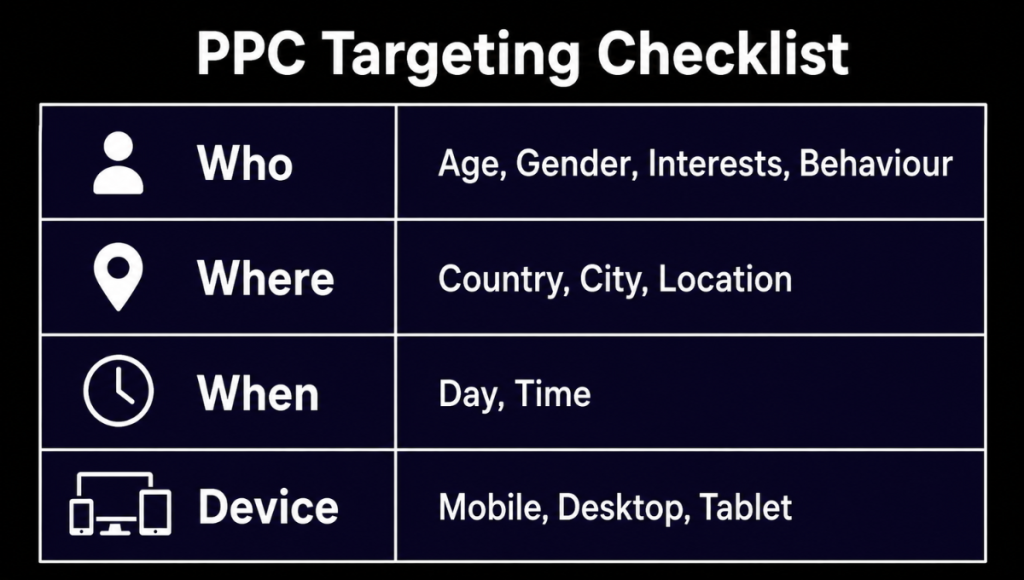
With Pay-Per-Click (PPC) advertising, a company pays for its advertisement every time it gets clicked on. Google Ads is one of many PPC services. Google Ads PPC allows businesses to bid on certain keywords, with the result being a targeted paid advertisement that shows up above regular search results.
In our example of a car rental company in Dubai, advertisements for that company would show up in the top search results when that company bids on the keyword searched for – “rent a car in Dubai.” PPC advertising also allows targeting based on:
- Demographics
- Location
- Device
- Interests
- Behaviors
- What time of day it is
- How active a specific user is on a website
Unlike the long-term commitment of search engine optimization (SEO), PPC for lead generation gets immediate results. But those results (web users visiting a specific site) will disappear the instant a budget, or paid commitment, stops.
Key Differences Between SEO and PPC
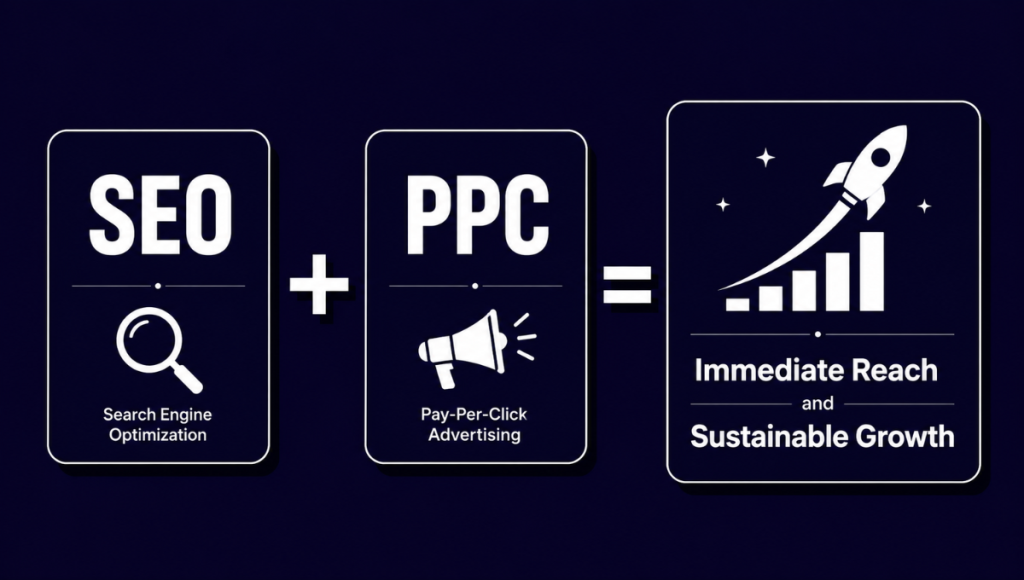
SEO (Search Engine Optimization) and PPC (Pay-Per-Click) share the goal of enhancing search visibility for businesses. However, there are key distinctions between SEO vs PPC.
Cost Structure
SEO does not charge on a per-click basis. Costs for SEO include payment for time and expertise for content and technical optimizations, as well as link building and tools. PPC requires an immediate cost for ads that is dependent on cost-per-click for competitive keywords, industries, and targeting, as well as the quality of ads.
Speed of Results
Traffic and leads can be generated almost immediately after launching PPC ads. With SEO, the processes of crawling, evaluating, and ranking by search engines take time. SEO is better for long-term sustainable growth.
Duration of Results
Traffic from SEO can be generated for months and even years, with some maintenance. PPC ad management will only drive traffic for the budgeted time or length of the active campaign.
Search Result Position
PPC ads will typically be the first results shown in a search and will be labeled as sponsored. Listings gained through SEO will appear in search results naturally and will be trusted more by users compared to ads. However, ads will have more visibility.
Control and Targeting
Granular control is afforded by PPC for keywords, geographies, devices, audiences, times, and budget. With SEO, control is less direct and is dictated by the search engine about relevance, quality, authority, and ranking.
Testing and Data
PPC will have rapid results and will afford the ability to test different offers, ads, and landing pages. With SEO, the results are slow, but will reveal insights into consumer interests, search trends, and long-term performance of content.
Benefits of SEO
Sustained Traffic
SEO has the advantage of drawing traffic that doesn’t need to be paid for, like a PPC campaign management.
Increased Trust
A high ranking gives you a great deal of trust as well as strong brand authority.
Impactful Functionality
SEO really helps the content be functional in a way that guides customers.
Increasing Returns
As SEO rankings improve, the traffic, leads, and sales also improve and become more valuable.
Expanded Reach
With SEO services, a business is more likely to show up on a greater number of relevant searches.
Limitations of SEO
There are also several challenges with SEO.
- New websites or those that target competitive keywords often see little return in the first few months.
- Search engine algorithms change, impacting how something ranks. SEO also includes maintenance of the site, regular updates of content, and constant analysis of competitors.
- Even with best practices, there is no way to guarantee that a page ranks in the first position. Businesses should focus on consistency.
Benefits of PPC
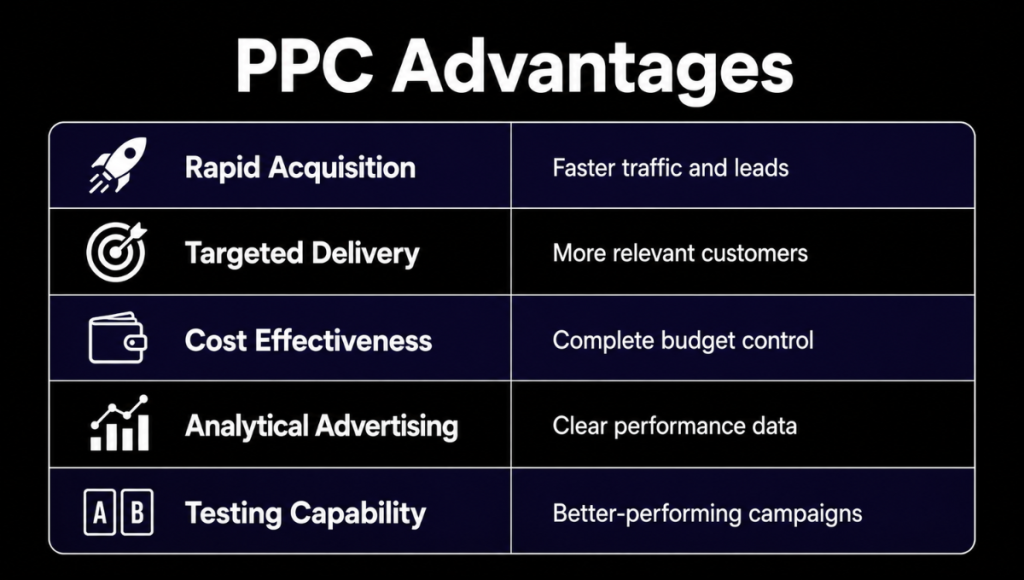
PPC provides very fast visibility with quick PPC ROI.
Rapid Acquisition
PPC systems are designed to give quick traffic acquisition to your website. This is especially useful if your company is new, there are time-sensitive offers, or you have deadlines on lead generation.
Targeted Delivery
Potential customers are targetable through their specific location, interests, demographics, device type, and search intent.
Cost Effectiveness
PPC systems by top lead generation agencies allow for specific budgets to be set for daily limits, maximum bids, and campaign costs. These campaigns can be completely frozen or altered with no previous costs incurred.
Analytical Advertising
Businesses can clearly see how campaigns have performed through the metrics of impressions, clicks, cost per click, conversions, cost per lead, ROI of ads, etc.
Testing Offers and Keywords
PPC systems allow for testing which offers and keywords are the best that capture the highest traffic and conversion rates. This testing can be integrated with enterprise-level organic SEO and content strategies.
Limitations of PPC
- The biggest disadvantage of a PPC strategy is its cost. An organization must continually fund a PPC strategy to maintain web traffic and an organization’s ads.
- An organization can lose money by targeting broad keywords, poor landing page design, an ill-defined target audience, and by running weak campaigns. Keywords with lots of competition can also be expensive.
- PPC management services can be ineffective if a business’s website experience and offer (including pricing and the process to convert) are suboptimal.
Can SEO and PPC Work Together?
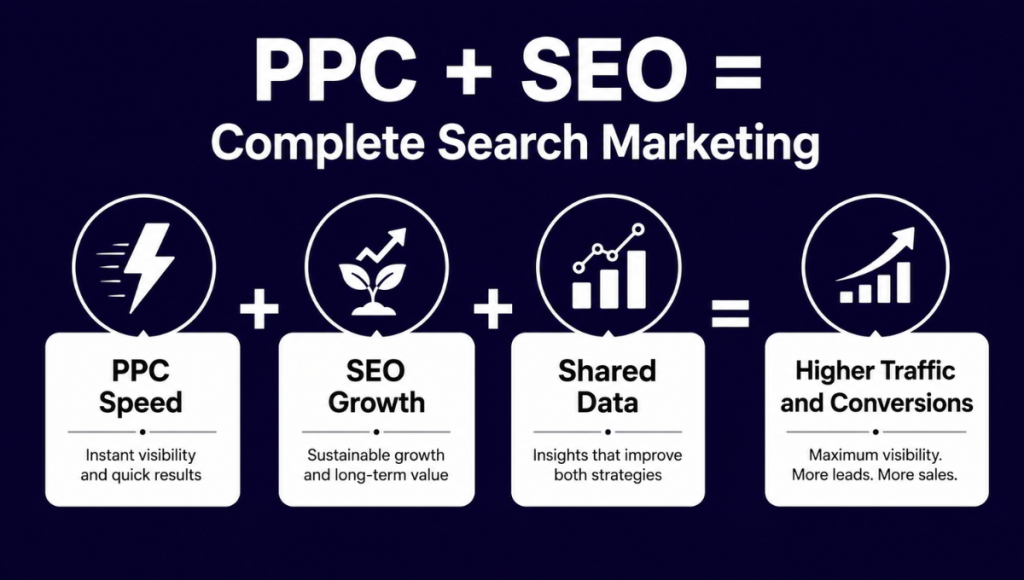
The combination of both seo services USA and PPC strategies, rather than selecting one or the other, is the ideal approach for many businesses.
While the SEO strategy is being put into place, PPC ads and lead generation services can produce an influx of traffic very quickly. While SEO works to improve the search engine rankings for a business, paid ads for specific campaigns can be reduced. Alternatively, lower-value ads can be reduced.
The PPC strategy by a top digital marketing company can also boost an SEO strategy. High-converting PPC keywords can be used to make service and product pages as well as blog pages, and can be optimized for higher rankings.
The combination of SEO and PPC marketing strategies can lead to the following:
- Payouts from PPC ads can produce high traffic in a short amount of time.
- Organic traffic from SEO is very sustainable.
- PPC aids in deciding which messages or keywords sell.
- SEO aids in creating content to improve the customer experience.
- PPC retargets customers.
- SEO eliminates the need for continued ad spending.
- Combined efforts lead to higher traffic.
To increase credibility and recognition, brands need to appear in both the paid and organic search results. A strong digital marketing strategy helps businesses increase visibility, reach the right audience, and drive sustainable growth.
Factors to Consider Before Choosing a Strategy in SEO vs PPC
Here are some important factors to consider before using PPC or SEO.
Your Marketing Budget
PPC marketing strategies cost money each time an advertisement is shown. SEO costs money mainly for content and optimization. If investing money, how quickly do you need results?
Your Business Goals
Do you need immediate cash flow or want to establish authority in your industry? Do you want to run a short-term market test? Each goal can alter the decision you make between SEO and PPC.
Your Industry Competition
Use keyword-related research to see how competitive the industry is to rank in organic searches and what the cost of PPC advertising is in your industry. If the cost of a sustainable PPC advertising campaign is cheaper than the cost of a competitive SEO campaign in your industry, you will likely choose that option.
Your Website Quality
SEO and PPC mean nothing if you have a poor quality website. If your website is slow, hard to navigate, and contains poor quality and unoptimized content, you will not see good results from either option.
Your Sales Timeline
If you need results fast, PPC is best. If you have a long-term target, use SEO strategies. Combining both is a good strategy to use when customers take a long time to make a decision.
Grow Smarter with TechBuzz Digital Marketing Services
Through focused digital marketing solutions, TechBuzz aids companies in the pursuit of safe returns and ongoing growth. After more than six years in the business, the members of our team have made it their mission to build stronger online brand visibility and create bespoke strategies. We target practical solutions that create longer-term and more sustainable success for our clients in the rapidly evolving digital environment, ranging from the best strategies to extend their reach to making a more convincing case for their conversions.
Conclusion
Both SEO and PPC are important areas of digital marketing. There are differences and distinctions between the two. The results of SEO are attractive for long periods of time after the initial work to obtain them. Local SEO is also useful in building reputation and trust with your audience. Pay-per-click ads, on the other hand, are useful in the short term to achieve sales, leads, and traffic to your site. PPC is also useful for testing different methods and approaches to advertising.
There are many different situations and different companies with different needs and different funds available for different methods. A company starting with little funds available for advertising may target a local audience through small PPC ads while creating a blog. A small company with limited funds available for advertising may begin with Seo vs. Google Ads and valuable content. A well-established company may use both to target a greater audience. Contact us today to build a tailored digital marketing strategy that drives visibility, growth, and long-term success.
FAQS
Is SEO Less Expensive than PPC?
Compared to PPC, SEO doesn’t charge for clicks. SEO isn’t free, though. Money still needs to be invested in content, research to make the site and links better, and to hire professionals. Unlike SEO, PPC requires that clicks be paid for. In contrast to PPC, SEO becomes more cost-effective the longer it is used. PPC can be costlier even when used in the short-term.
How Long Before You See the Results of SEO?
SEO can have long lead times, even when visibility, competition, and content are all high quality. Improvements are likely to come sooner with less competition and higher quality content. The longer lead times are likely to come with high-competition keywords. Frequent updates and high-quality new content are necessary for good results.
Should New Businesses be Using SEO or PPC?
Using PPC, new businesses can begin to acquire customers and test which keywords are effective to use for their business while they wait for their site to be SEO optimized. SEO gravitates new customers toward businesses over the long term, while PPC offers customers in the short term. Good use of the two together offers new businesses the best results.