Summary: AI drives businesses toward a better understanding of their clientele while taking care of tedious tasks, enhancing campaign results and overall performance. Through analysis of customer information and categorization of target demographics, creating tailor-made experiences and copy, optimizing digital presence through SEO, social media, advertising, and email automation, chat, and predictive analytics, AI is clearly taking the marketing game to higher levels.
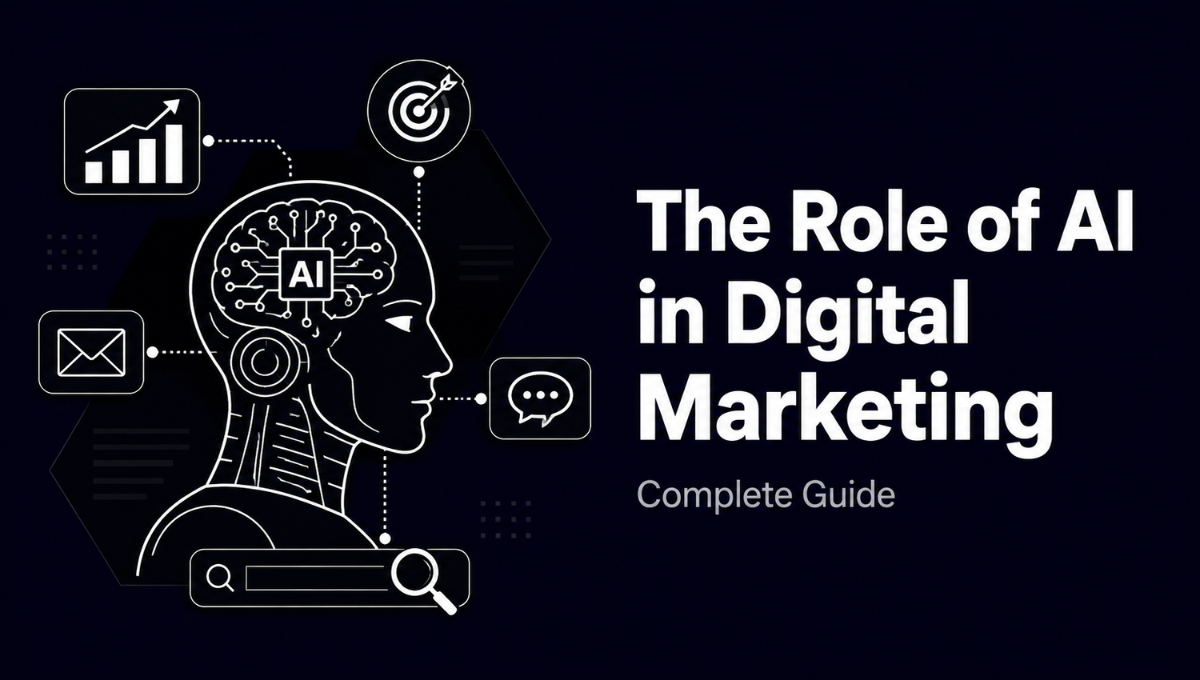
The Role of AI in Digital Marketing: Everything You Need to Know
AI Technology AI Content Generation AI Marketing Agency
Today’s digital marketing is being transformed by the impact of AI and is fast becoming the dominant marketing tool. AI in digital marketing has the potential to help organizations understand their customers and their needs better and more quickly, especially concerning the effectiveness of their marketing campaigns.
To be effective, digital marketing must do more than make ads and post content. AI has the ability to use a wide assortment of data to optimize every aspect of the digital customer experience. The most simplified definition of AI in digital marketing is the automation of time-consuming and laborious marketing functions that would normally require human intervention.
Unlike the automation of other business processes, AI in marketing does not take the place of the marketer. They provide a significant advantage when combined with the marketer’s emotional and perceptive functions, as well as a greater understanding of the brand and business they are marketing.
Understanding AI in Digital Marketing
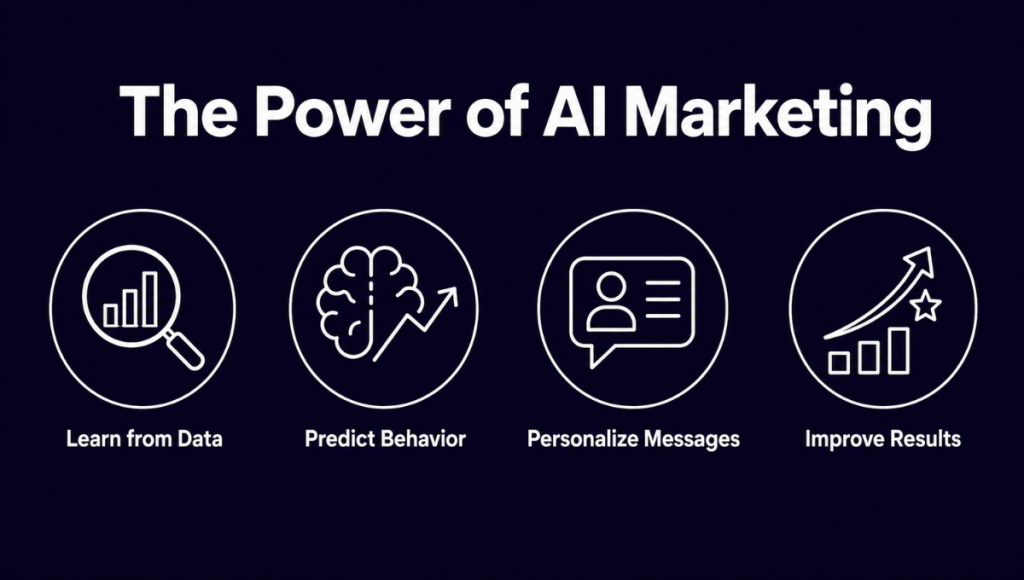
AI has the ability to learn, identify trends, and make predictions. Applications of AI in the world of technology are endless. In digital marketing, specific algorithms are engineered to analyze data from customer interactions, feedback, and online traffic. This enables brands to make and implement informed decisions.
In practice, this means that AI does not guess what demographic will respond to an advertisement. Instead, it looks at what has been successful in the past and focuses its attention on that audience. AI can differentiate between consumers so that blanket emails become customized emails. Campaign reports are promptly analyzed by the AI team, and monotonous tasks such as searching for trends in hundreds of reports become more efficient.
Why Does AI Matter in Digital Marketing?
Digital marketing is more competitive than ever since there are thousands of channels customers interact with: websites, social media, search engines, emails, and apps. To stand out, brands must be relevant. timely, and useful.
Digital marketing relies on data. Companies must rely on their customer data to develop strategies. It’s still difficult to apply AI marketing strategy if you don’t fully understand your customers. AI is helping to change that.
AI is the way of the future of digital marketing. Companies are utilizing AI to develop a marketing strategy more quickly. Developing strategies faster also creates a competitive edge to personalize faster. Personalization is the most valuable component of AI. It is easier to reach your customer when your marketing offers, AI marketing campaigns, and digital marketing are personalized toward that customer.
Key Roles of AI in Digital Marketing
1. Customer Data Analysis
Analyzing customer data is one of the most significant roles AI plays today. Recording data occurs through each interaction over the digital platform: website visits, clicks, purchases, searches, emails, social media, etc.
With the capability of data organization and interpretation by AI, data analysis becomes manageable and beneficial for the people who need it.
Data analysis will help marketers answer the following questions:
- What do they like?
- Which services or products do they use or prefer?
- What type of content do they engage with?
- What is the cause of an unfinished sale?
- Which customer segment is the most profitable?
- What motivates them to make the purchase?
Business procedures will be facilitated, and analysis-based decisions can be made as opposed to assuming.
2. Audience Segmentation
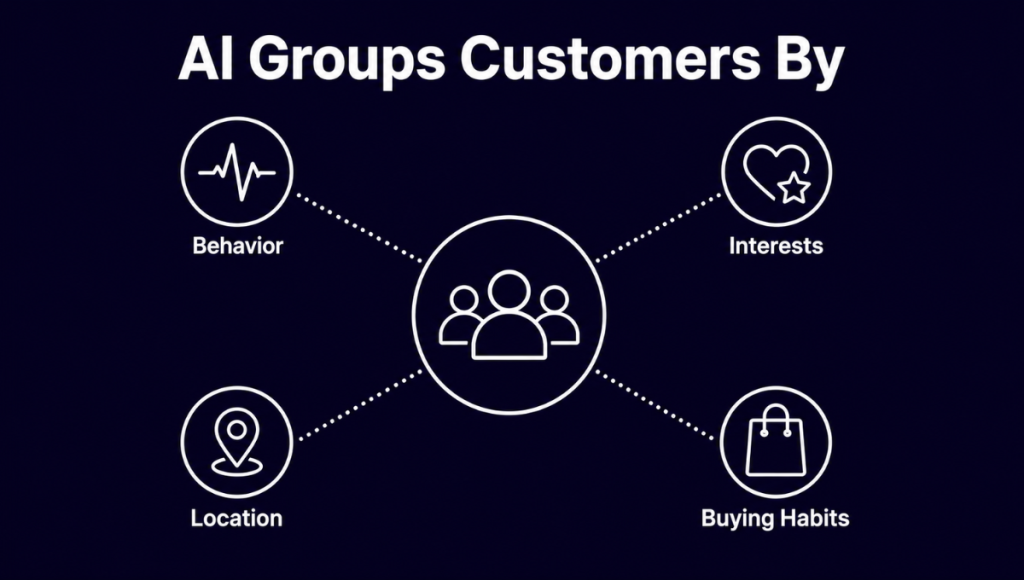
Audience segmentation divides customers into smaller groups based on similarities in demographics, behaviors, and preferences, using characteristics like age, location, interests, and buying habits.
Artificial intelligence tools improve segmentation by distinguishing differences in ways that humans can’t do as quickly and accurately. Where previously we could only categorize and label large segments as “website visitors,” AI will now help us segment into detailed classifications of, for example, “customers likely to buy again,” “premium product users,” or “visitors who need more information.” Marketers will always be better able to refine their approaches and provide more tailored messages to different audiences.
3. Personalized Customer Experiences
Digital marketing services benefit significantly from AI-powered personalization. Based on specific customer behaviors, AI marketing tools allow brands to tailor content, suggestions, emails, ads, and web experiences.
An online shop can have different customers seeing different suggested products. In the case of emails, campaigns can have different offers based on customer preferences.
Due to users feeling brands are meeting their expectations, personalization can enhance engagement, conversion, and brand loyalty. Brands are encouraged to use data in a considerate way by ensuring their personalized offerings remain non-intrusive.
4. AI Content Creation and Optimization
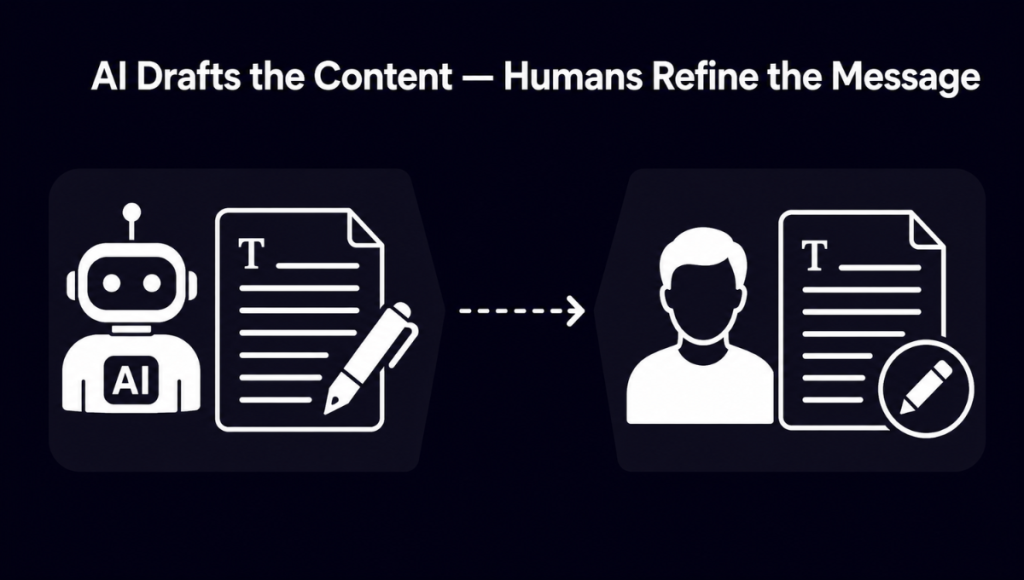
AI is becoming increasingly important in content marketing. I can be used to produce content ideas, blog posts, brand social media captions, email subject lines, ad copy, product descriptions, video scripts, content outlines, and much more.
If you’ve already produced content, AI can suggest improvements for headlines, keywords, structure, readability, and tone.
Content created by AI needs to be fact-checked by humans. This is important for accuracy, brand voice, originality, and emotional impact. The most effective application for AI technology is as a creative partner while humans are necessary to edit and refine the final output.
5. Search Engine Optimization
AI has the potential to help marketers with an understanding of what people search, how they word queries, what types of search results people respond to, and what types of content are the most successful.
Additionally, marketers can take advantage of AI seo services when examining potential keywords, searching for content gaps, structuring content, and understanding the intent behind the various forms of search.
AI has the potential to help marketers with the review of many important, technically accurate forms of AI seo, including broken links, duplicate content, metadata issues, and page speeds.
6. Social Media Marketing
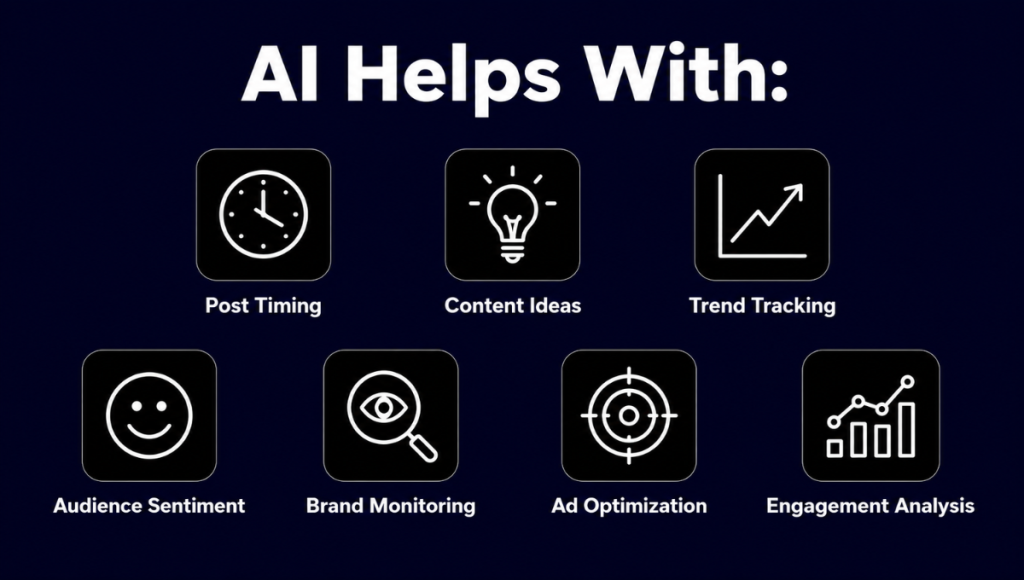
Managing social media demands a lot of preparation and responsiveness, as well as knowledge of current trends and an assessment of metrics. AI experts can assist in all of these aspects.
AI can recognize optimal posting times, recommend AI Content generation themes, interpret audience sentiments, monitor brand mentions, and evaluate engagement statistics. It can optimize audience engagement in social media ads, while also improving management of advertising spend and ad creation.
AI also enhances social media monitoring by helping companies understand consumer sentiments, whether they are directed to a particular brand or product, or are more industry-wide or trend-based.
7. Paid Advertising Optimization
AI is now used extensively for paid digital advertising. Bidding, budgeting, placements, timing, creative design, and testing are all components of online ads.
AI optimization can provide insights and recommendations for improving ads and bids, and can also determine wasted ads. Components of paid ads are assisted through AI.
- Target Audience
- Bidding
- Budgeting
- Testing
- Creatives
- Conversions
- Retargeting
These components help the top AI digital marketing agency gain better ads and bids, and help marketers gain better ads and bids.
8. Email Marketing Automation
Email marketing is so much better when combined with AI, because you can send completely customized personal email journeys, rather than the same message to everyone.
AI and automation can determine what emails customers are sent and when based on their behavior. For example, new subscribers might receive a welcome series, and customers who leave an item in their cart will get a reminder that they still have an item in their cart.
AI influences the creativity of your email marketing strategies by determining the subject lines you choose, the times you send, your frequency, and content even more customized than before. Email marketing is so much better with AI, because it is more relevant and definitely not repetitive.
9. Chatbots and Customer Support
AI-powered chatbots have proliferated the realm of digital marketing and customer service, providing capabilities to answer various FAQs, book appointments, recommend products and services, collect potential leads, and provide instant service. Chatbots can greatly benefit customer service as they provide instant service irrespective of the time and even outside service hours.
AI chatbots should be crafted with immense caution, as they cannot provide service for complex, challenging, and emotional customer service scenarios. Users should be presented with the option to reach a service representative.
The solution intends to improve service and support overall response time and efficiency, without the elimination of support representative services.
10. Predictive Analytics
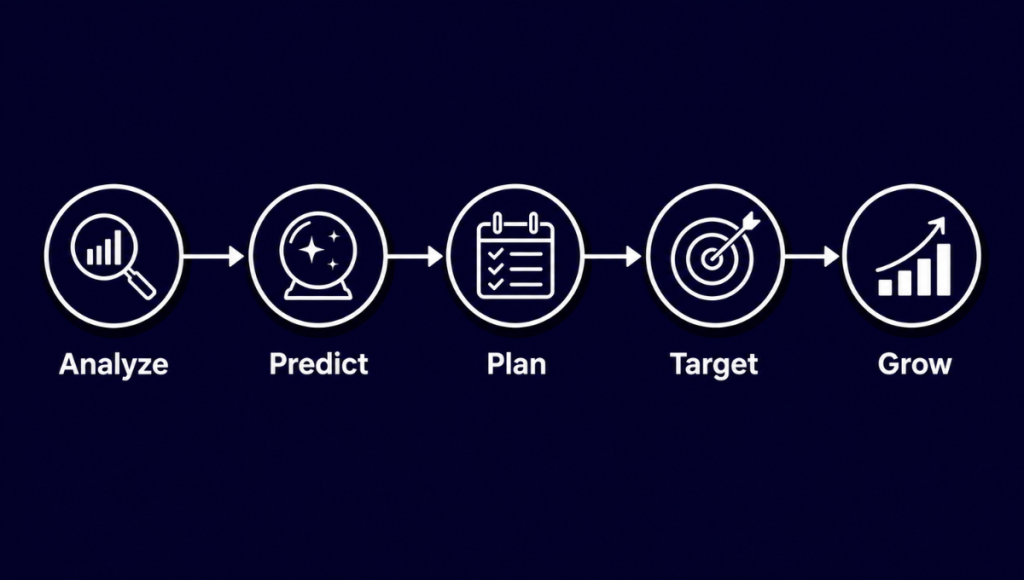
One great role of AI powered marketing is predictive analytics. This uses previous data to predict future behavior. With predictive analytics, AI allows marketers to anticipate:
- Which customers are more prone to making a purchase?
- What customers are likely to stop engaging?
- What products will be in demand?
- What campaigns will yield optimal impact?
- What leads are likely to finalize a conversion?
- What is the most likely time a customer will make a purchase?
Having access to this information allows an AI marketing agency to get to work and, more importantly, allows a company to be proactive and not reactive.
Future of AI in Digital Marketing
AI will continue building on the existing digital marketing progress and merging for the future of work. It will bring developing methods for marketing to customers with a deeper ability and understanding to bring faster and smarter AI tools to the business.
The future of AI in marketing is not solely based on technological tools. Trust and storytelling will still be a major part of marketing, and customer relationships will be more important than ever.
Marketers will be more efficient with the use of AI marketing tools, but the brands that will thrive will be the ones that balance the use of AI responsibly with human capital and integrate creative thinking into their business.
TechBuzz – Digital Marketing Solutions Built for Long-Term Growth

With its focused digital marketing services, TechBuzz ensures enterprises receive extraordinary value and sustained growth from their investment. With our experts, we can help you build your brand online, gain your target audience, and implement customized marketing strategies.
TechBuzz has the experience and know-how to offer your company customer-focused digital marketing solutions. Our bespoke strategies help improve brand visibility, customer engagement, and business growth online. With years of experience in digital marketing, we understand the online marketplace and your company’s potential growth in it.
Conclusion
AI is changing the landscape of digital marketing, providing tools to comprehend your customer base, create tailor-made solutions, and devise time-saving, high-quality, efficient strategies.
AI has integrated itself into digital marketing from content and SEO to paid ads, email marketing, customer support, and beyond, including analyzing and predicting consumer behavior. It is enabling marketers to maximize campaign potential by providing the right message to the right demographic at the right time.
AI models cannot replace a human’s capacity for creativity and planning. Instead, it should work side by side with the AI model. The most successful digital marketing campaigns are built on the union of the human-developed concepts that give the emotional and rational foundation and the brand-building frameworks that give the general direction, and the automated, data-providing infrastructure of AI. Contact Us today and start building your digital growth journey.
FAQS
How is AI Used in Digital Marketing?
Marketers leverage AI to better analyze customer data, tailor content to the consumer, and improve campaign automation and ad targeting. AI systems can also manage and score leads, predict customer journeys, and even manage chat support. Furthermore, AI helps systems learn to better optimize for search. All of this helps digital marketers improve the speed and quality of their campaigns.
Can AI Replace Digital Marketers?
AI is incapable of replacing digital marketers. It is great for automation, support, and analysis, but lacks the finesse and understanding essential to marketing such as strategic thinking and creativity. For this reason, it can only be a supplemental marketing tool.
What is the Biggest Benefit of AI in Digital Marketing?
AI allows for the biggest benefit of digital marketing automation, which is the level of personalization it can achieve. Systems become faster and more efficient, and as a result, campaigns become less general and focus on the more specific needs of each targeted customer. This benefit is achieved with minimal effort for even the largest target markets.